

PM Surya Ghar Muft Bijli Yojana 2026: Complete Guide for Maharashtra Homeowners
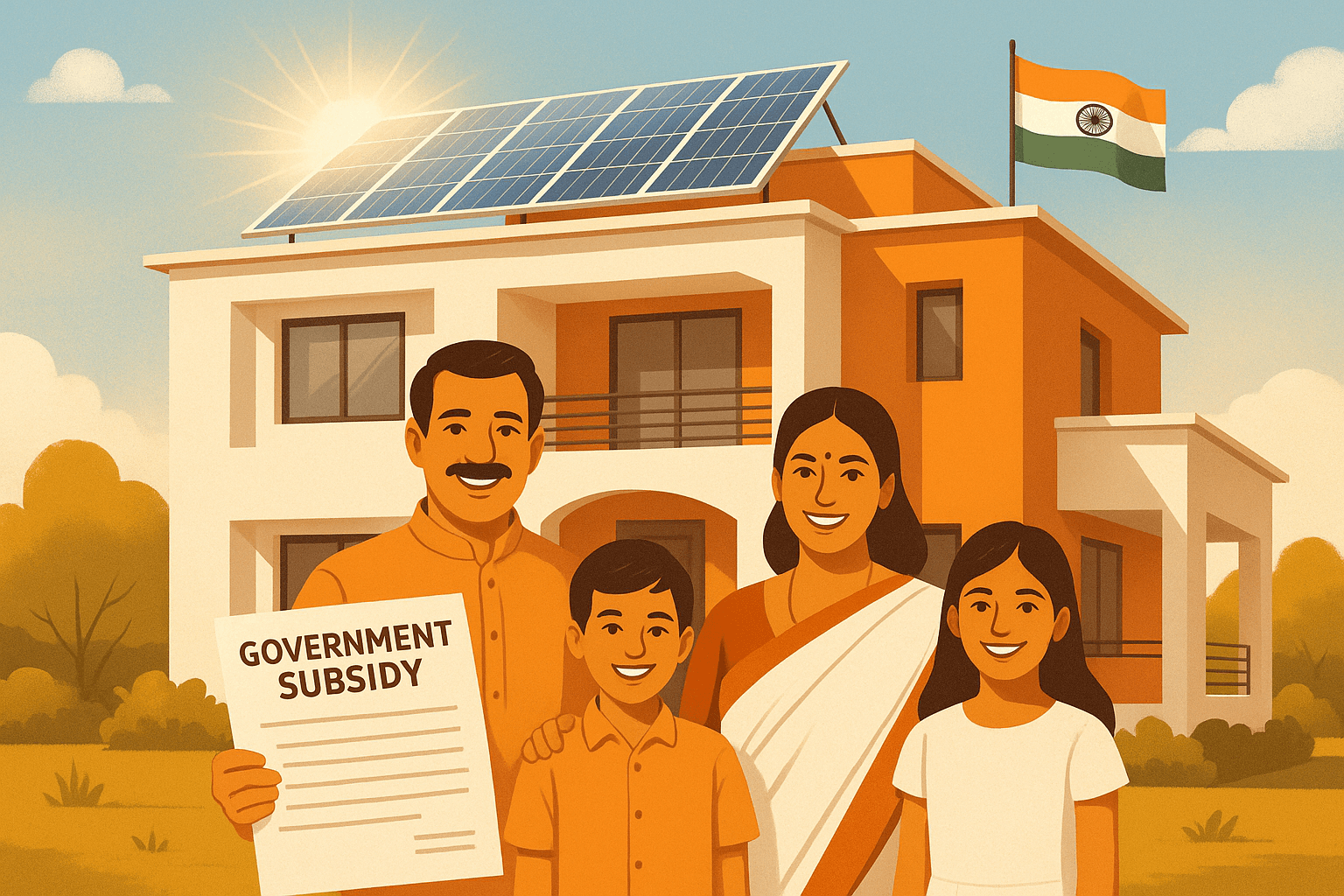
Imagine cutting your electricity bill to nearly zero — or even earning money from the power your rooftop generates. That is not a distant dream anymore. Under the PM Surya Ghar Muft Bijli Yojana, the Government of India is offering massive subsidies of up to Rs 78,000 to help homeowners install rooftop solar systems and receive 300 units of free electricity every month.
Launched in February 2024 by Prime Minister Narendra Modi, this scheme has already transformed over 20.8 lakh households across India as of December 2025. Maharashtra alone ranks second nationally with nearly 3.92 lakh installations — and the numbers are accelerating. With a total outlay of Rs 75,021 crore and a target of 1 crore solar-powered homes by 2027, there has never been a better time for Maharashtra homeowners to go solar.
Whether you live in Dhule, Nashik, Pune, or anywhere else in Maharashtra, this guide covers everything you need to know — subsidy amounts, step-by-step application process, eligibility, required documents, costs, and how AceSolarTech can handle the entire process for you from start to finish.
What Is PM Surya Ghar Muft Bijli Yojana?
PM Surya Ghar: Muft Bijli Yojana (PMSGMBY) is a central government scheme administered by the Ministry of New and Renewable Energy (MNRE) that provides substantial subsidies to residential households for installing grid-connected rooftop solar systems. The scheme operates through state-level electricity distribution companies — in Maharashtra, that is MSEDCL (Maharashtra State Electricity Distribution Company Limited).
The core promise is simple: install solar panels on your roof with government support, generate your own electricity, and enjoy up to 300 free units per month through net metering. Any surplus power you generate is exported to the grid, and MSEDCL credits you for it.
Key Highlights
- Total scheme budget: Rs 75,021 crore
- Subsidy: Up to Rs 78,000 per household
- Target: 1 crore solar homes by FY 2026-27
- Free electricity: Up to 300 units/month
- Helpline: 1800-180-3333 (toll-free) or dial 15555
- Official portal: pmsuryaghar.gov.in
Subsidy Amounts: How Much Can You Save?
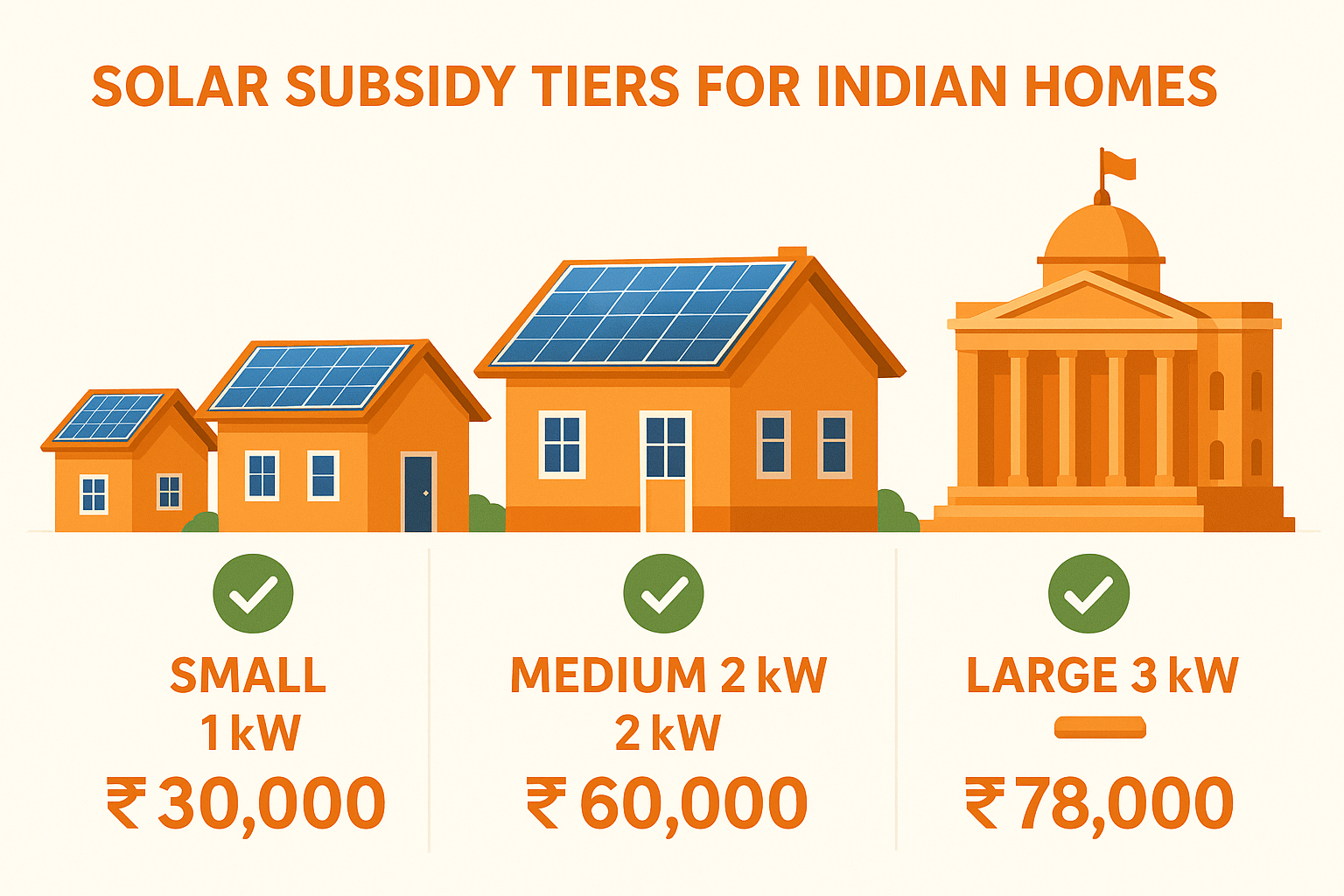
The central subsidy under PM Surya Ghar is structured in slabs based on the capacity of the solar system you install. Here is the complete breakdown:
| System Capacity | Central Subsidy (CFA) | Subsidy Rate | Average System Cost | Your Net Cost (Approx.) |
|---|---|---|---|---|
| 1 kW | Rs 30,000 | 60% of benchmark cost | Rs 50,000 - 65,000 | Rs 20,000 - 35,000 |
| 2 kW | Rs 60,000 | 60% of benchmark cost | Rs 1,00,000 - 1,20,000 | Rs 40,000 - 60,000 |
| 3 kW | Rs 78,000 | 60% for first 2kW + 40% for additional 1kW | Rs 1,50,000 - 1,80,000 | Rs 72,000 - 1,02,000 |
| 4 kW | Rs 78,000 (capped) | Subsidy capped at 3kW | Rs 2,00,000 - 2,40,000 | Rs 1,22,000 - 1,62,000 |
| 5 kW | Rs 78,000 (capped) | Subsidy capped at 3kW | Rs 2,50,000 - 3,00,000 | Rs 1,72,000 - 2,22,000 |
| 10 kW | Rs 78,000 (capped) | Subsidy capped at 3kW | Rs 5,00,000 - 6,50,000 | Rs 4,22,000 - 5,72,000 |
Important: The subsidy is capped at 3 kW capacity. Even if you install a larger system (up to 10 kW is allowed under net metering), you will receive a maximum subsidy of Rs 78,000.
Understanding the Subsidy Math
- For systems up to 2 kW: You get a 60% subsidy on the benchmark cost set by MNRE.
- For the portion between 2 kW and 3 kW: You get a 40% subsidy on the additional capacity.
- Beyond 3 kW: No additional central subsidy — but you still benefit from net metering savings.
For a typical Maharashtra household consuming 200-400 units per month, a 3 kW system is the sweet spot — it maximizes the subsidy benefit while generating enough power to cover most of your electricity needs.
Maharashtra Bonus: The SMART Solar Scheme
Here is great news for Maharashtra homeowners — the state government has launched an additional subsidy program on top of the central PM Surya Ghar scheme.
The Swayampurna Maharashtra Residential Rooftop (SMART) Solar Scheme, launched in October 2025, provides extra state subsidies for economically weaker households:
| Category | State Subsidy (Extra) | Central Subsidy | Combined Subsidy | Total Coverage |
|---|---|---|---|---|
| BPL Households | Rs 17,500 | Rs 30,000 | Rs 47,500 | ~95% of cost |
| SC/ST Households | Rs 15,000 | Rs 30,000 | Rs 45,000 | ~90% of cost |
| EWS (General) | Rs 10,000 | Rs 30,000 | Rs 40,000 | ~80% of cost |
The SMART scheme has a dedicated budget of Rs 655 crore (Rs 330 crore for FY 2025-26 and Rs 325 crore for FY 2026-27) and targets 5 lakh households across Maharashtra. This means eligible families in categories like BPL, SC/ST, and EWS can get a 1 kW rooftop solar system installed for as little as Rs 2,500 to Rs 10,000 out of pocket.
Pro Tip: AceSolarTech helps you determine if you qualify for the SMART scheme and handles both the central and state subsidy applications simultaneously. Check your savings with our calculator.
Eligibility Criteria: Who Can Apply?
Before you apply, make sure you meet all the eligibility requirements:
- Indian citizen — Must hold valid Indian citizenship
- Own a house — You must be the owner of the property where the system will be installed (tenants cannot apply directly)
- Suitable rooftop — Your roof must have adequate space and structural strength for solar panels (approximately 10 sq. meters per kW)
- Valid electricity connection — You must have an active MSEDCL electricity connection in your name
- No prior solar subsidy — You must not have availed of any other central government solar rooftop subsidy previously
- Matching name — The name on the electricity bill should match the applicant's identity documents
- Residential use only — The connection must be a residential (domestic) category connection
Who Is NOT Eligible?
- Commercial or industrial electricity consumers
- Households that have already received a solar subsidy under any previous government scheme (e.g., Phase I or Phase II of the Grid-Connected Rooftop Solar Programme)
- Tenants or occupants who are not property owners
- Properties with inadequate roof space or structural issues
Documents Required
Keep the following documents ready before starting your application:
Mandatory Documents
- Aadhaar Card — Of the property owner / electricity bill holder
- Electricity Bill — Latest MSEDCL electricity bill (must show consumer number clearly)
- Bank Account Details — Aadhaar-linked bank account passbook or cancelled cheque (subsidy will be credited here)
- Ration Card — For identity and address verification
- Passport-size Photograph — Recent photo of the applicant
- Mobile Number — Active number linked to Aadhaar for OTP verification
- Email ID — For portal registration and communication
Additional Documents (May Be Required)
- Property ownership proof — Property tax receipt, sale deed, or mutation extract
- Income certificate — If applying under SMART scheme (BPL/SC/ST/EWS categories)
- Caste certificate — For SC/ST category applicants under the SMART scheme
- Roof photograph — Clear photo showing available roof space
- NOC from housing society — If you live in a housing society or apartment complex
AceSolarTech Advantage: Our team helps you compile and verify all documents before submission, reducing rejection chances. We also handle the photography and technical documentation.
Step-by-Step Application Process
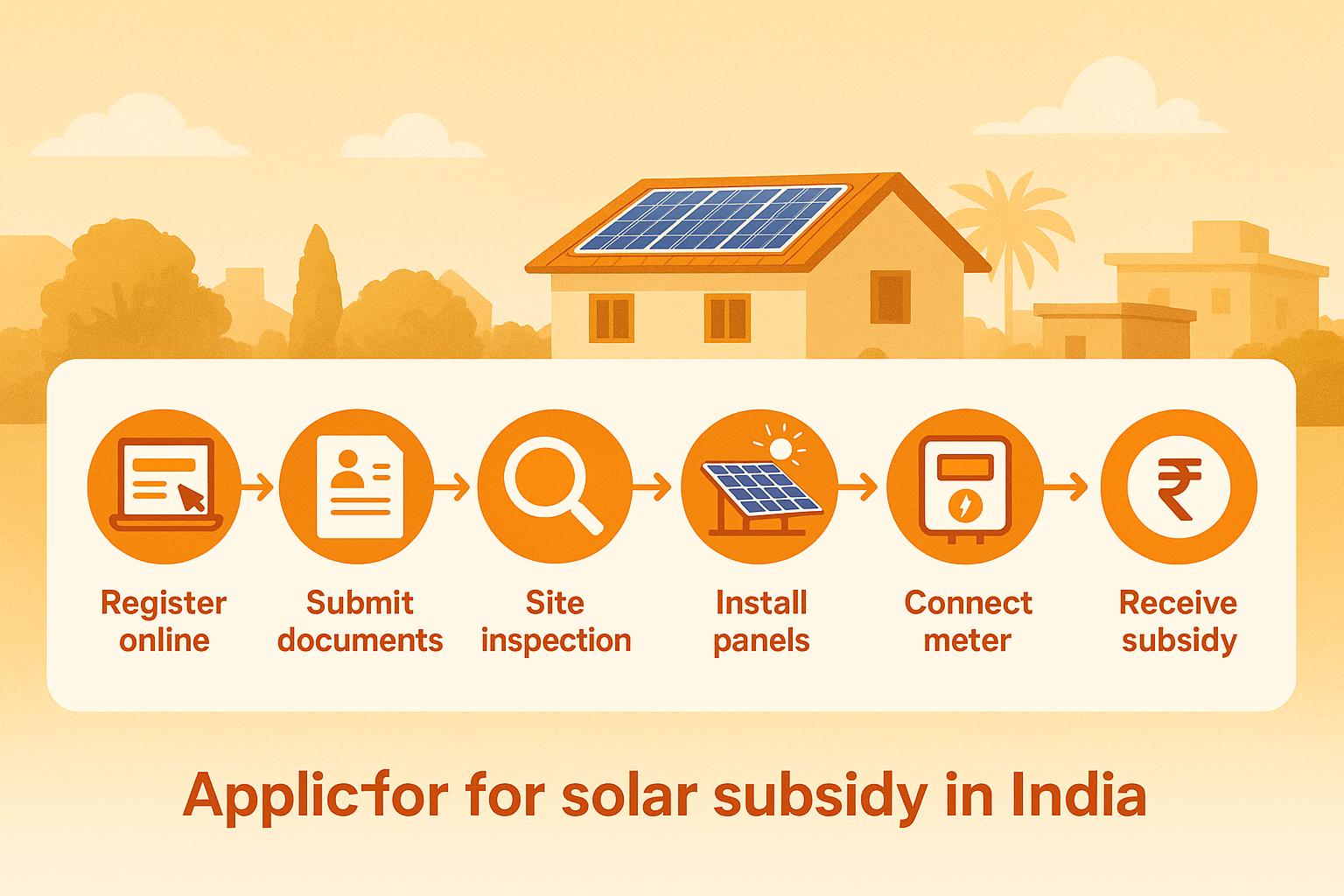
Here is the complete process, from registration to receiving your subsidy:
Step 1: Register on the National Portal
- Visit pmsuryaghar.gov.in
- Click on "Apply for Rooftop Solar"
- Select your State (Maharashtra) and DISCOM (MSEDCL)
- Enter your MSEDCL Consumer Number from your electricity bill
- Provide your mobile number and email address
- Create a password and complete the registration
Step 2: Submit Your Application
- Log in to the portal with your credentials
- Fill in the application form with your personal details — name, address, district, PIN code
- Select the system capacity you want to install (we recommend 3 kW for most homes)
- Upload all required documents (Aadhaar, electricity bill, bank details, photo)
- Review and submit the application
Step 3: Wait for DISCOM (MSEDCL) Approval
- MSEDCL will review your application and conduct a technical feasibility study
- They assess your roof, sanctioned load, and local grid capacity
- Approval typically takes 15-30 days
- You will receive an approval notification via SMS and on the portal
Step 4: Choose an Empanelled Vendor and Install
- After DISCOM approval, select an MNRE-registered vendor from the portal's vendor list
- The vendor will conduct a site survey and finalize the system design
- Installation is completed, including solar panels, inverter, wiring, and mounting structures
- The vendor also installs the net meter (bi-directional meter)
- Typical installation time: 1-3 days for residential systems
With AceSolarTech: As an empanelled solar installer, we handle Steps 1 through 6 entirely. You just need to provide your documents — we take care of the rest.
Step 5: Upload Post-Installation Documents
After installation is complete:
- Log in to the portal
- Upload installation photographs (panels on roof, inverter, meter)
- Upload the vendor invoice and warranty certificates
- Upload the net meter commissioning report
- Submit for DISCOM inspection
Step 6: DISCOM Inspection and Verification
- MSEDCL sends an inspector to verify the installation
- The inspector checks panel placement, wiring, safety compliance, and meter reading
- After successful inspection, MSEDCL activates net metering
- A commissioning certificate is issued
Step 7: Receive Your Subsidy
- Once the commissioning certificate is uploaded on the portal, your subsidy claim is processed
- The subsidy amount is directly credited to your Aadhaar-linked bank account
- Disbursement typically takes 30-45 days after commissioning
- You will receive a confirmation SMS when the subsidy is credited
Timeline: From Application to Free Electricity
| Stage | Duration | Cumulative Time |
|---|---|---|
| Portal registration and application | 1-2 days | Day 1-2 |
| MSEDCL feasibility review and approval | 15-30 days | Day 15-32 |
| Vendor selection and site survey | 3-7 days | Day 18-39 |
| System installation | 1-3 days | Day 19-42 |
| Post-installation documentation | 1-2 days | Day 20-44 |
| MSEDCL inspection and net metering | 15-30 days | Day 35-74 |
| Subsidy disbursement to bank account | 30-45 days | Day 65-119 |
Total estimated timeline: 2 to 4 months from application to subsidy receipt. Your solar system starts generating free electricity from the day of installation — the subsidy disbursement happens in the background.
AceSolarTech Fast Track: Our team maintains close coordination with MSEDCL, which helps expedite approvals and inspections. Most of our customers in Dhule and surrounding districts see the complete process wrapped up in under 3 months.
Cost Breakdown: With and Without Subsidy
Let us look at realistic numbers for a Maharashtra homeowner installing a 3 kW system — the most popular choice:
3 kW On-Grid Rooftop Solar System
| Component | Cost (Approx.) |
|---|---|
| Solar Panels (3 kW, Tier-1 brand) | Rs 75,000 - 85,000 |
| Grid-Tied Inverter | Rs 25,000 - 35,000 |
| Mounting Structure | Rs 15,000 - 20,000 |
| Wiring, ACDB/DCDB, Earthing | Rs 10,000 - 15,000 |
| Net Meter and Installation | Rs 8,000 - 12,000 |
| Labour and Commissioning | Rs 10,000 - 15,000 |
| Total Before Subsidy | Rs 1,43,000 - 1,82,000 |
| PM Surya Ghar Subsidy | - Rs 78,000 |
| Your Net Investment | Rs 65,000 - 1,04,000 |
Annual Savings and ROI
| Parameter | Value |
|---|---|
| Average daily generation (3 kW in Maharashtra) | 12-15 units |
| Monthly generation | 360-450 units |
| MSEDCL tariff saved (average Rs 7-8/unit) | Rs 2,500 - 3,600/month |
| Annual electricity savings | Rs 30,000 - 43,200 |
| Payback period (after subsidy) | 1.5 - 3.5 years |
| System lifespan | 25+ years |
| Lifetime savings | Rs 7,50,000 - 10,80,000 |
A 3 kW system in Maharashtra generates approximately 4,300-5,400 units per year thanks to the state's excellent solar irradiance (4.5-5.3 sun hours per day depending on your district). After the short payback period, you are essentially getting free electricity for the next 20+ years.
Use our Solar Savings Calculator to get a personalized estimate based on your district, electricity bill, and roof size.
Net Metering: How It Works in Maharashtra
Net metering is the mechanism that makes rooftop solar truly valuable. Here is how it works with MSEDCL:
- During the day: Your solar panels generate electricity. Whatever your home uses is consumed directly. The surplus is exported to the MSEDCL grid.
- At night or on cloudy days: Your home draws electricity from the grid as usual.
- Monthly billing: MSEDCL reads your bi-directional meter. If you exported more than you imported, you get a credit that carries forward. If you imported more, you pay only for the net difference.
- Annual settlement: At the end of the billing year, any remaining export credits are settled at a rate determined by MERC (Maharashtra Electricity Regulatory Commission).
Net Metering Rules in Maharashtra
- Available for systems from 1 kW to 500 kW (residential typically 1-10 kW)
- System size cannot exceed your sanctioned load
- MSEDCL installs the bi-directional meter at no extra charge under PM Surya Ghar
- Net metering agreement is valid for 25 years
- MERC allows simultaneous net metering for rooftop solar consumers who also avail open access
Frequently Asked Questions (FAQ)
1. Can I apply if I have already installed solar panels?
No. You must register and get DISCOM approval on the PM Surya Ghar portal before installation. If you install first and apply later, your subsidy application will be rejected. The process is: Register first, get approval, then install through an empanelled vendor.
2. Is there an income limit to avail the subsidy?
No. The PM Surya Ghar scheme has no income ceiling. Any residential household with a valid electricity connection can apply, regardless of income. However, the additional Maharashtra SMART Solar Scheme has specific categories (BPL, SC/ST, EWS) for the extra state subsidy.
3. How long does it take to receive the subsidy in my bank account?
After successful DISCOM inspection and commissioning, the subsidy is typically credited to your Aadhaar-linked bank account within 30-45 days. In some cases, it may take up to 60 days depending on processing volumes.
4. Can I install a system larger than 3 kW and still get the subsidy?
Yes. You can install a system up to 10 kW (or even larger, subject to your sanctioned load). However, the central subsidy is capped at Rs 78,000 regardless of how large the system is. The portion beyond 3 kW will be at your own cost, but you will still benefit from net metering savings on the entire system.
5. I live in a housing society. Can I apply?
Yes. Individual flat owners in housing societies can apply for their share of common area rooftop space. Group Housing Societies (GHS) and Resident Welfare Associations (RWAs) can also apply collectively, with different subsidy calculation rules. Contact AceSolarTech for guidance on society installations.
6. What happens if my application is delayed or rejected by MSEDCL?
You can track your application status on the PM Surya Ghar portal. If there are delays beyond the prescribed timelines, you can file a grievance directly on the portal under the "Grievance" section. You can also call the toll-free helpline at 1800-180-3333 or dial 15555 for assistance.
7. Does the solar system require maintenance?
Minimal. Solar panels require occasional cleaning (once every 2-4 weeks, more frequently during dusty months) and an annual inspection of wiring and inverter. There are no moving parts, so there is very little that can go wrong. Most panels come with a 25-year performance warranty, and inverters typically carry a 5-10 year warranty.
8. Will the subsidy scheme continue in 2026-27?
Yes. The scheme has been approved with funding through FY 2026-27. However, the government has set a target of 1 crore households, and subsidies are disbursed on a first-come, first-served basis within the allocated budget for each state. It is advisable to apply soon rather than waiting, as state-level allocation limits could be reached.
9. Can I take a loan to cover my share of the cost?
Absolutely. Many banks and NBFCs offer solar loans at competitive interest rates (8-12% per annum). Some banks like SBI, Bank of Baroda, and Union Bank have dedicated solar loan products. The EMI on a Rs 80,000-1,00,000 loan is typically Rs 1,700-2,200/month — which is often less than your current electricity bill.
10. What if my roof is not suitable for solar panels?
If your roof has structural concerns, excessive shading, or insufficient space, AceSolarTech will assess this during the free site survey and suggest alternatives. Options include elevated mounting structures, partial installations, or waiting until roof modifications are complete. We never recommend installations on unsuitable roofs.
Why Choose AceSolarTech for Your Solar Installation?
Going solar under PM Surya Ghar should be simple, but navigating government portals, coordinating with MSEDCL, and ensuring quality installation can be overwhelming. That is where AceSolarTech makes the difference.
What We Handle for You
- Free site survey — We assess your roof, shading, orientation, and recommend the optimal system size
- Complete paperwork — Portal registration, application submission, document compilation, and upload
- DISCOM coordination — We follow up with MSEDCL for approvals, inspection scheduling, and net metering activation
- Quality installation — Tier-1 solar panels, certified inverters, weather-resistant mounting, and clean wiring
- Post-installation support — We upload all commissioning documents and track your subsidy disbursement
- 5-year workmanship warranty — On top of the manufacturer's panel and inverter warranties
- Ongoing support — Annual maintenance reminders and performance monitoring guidance
Serving Dhule and All of Maharashtra
Based in Dhule, AceSolarTech provides installation services across Maharashtra including Nashik, Jalgaon, Nandurbar, Ahmednagar, Aurangabad (Chhatrapati Sambhajinagar), Pune, and surrounding districts. We understand the local MSEDCL processes, weather patterns, and grid conditions — because we live and work here.
Ready to Go Solar? Start Today
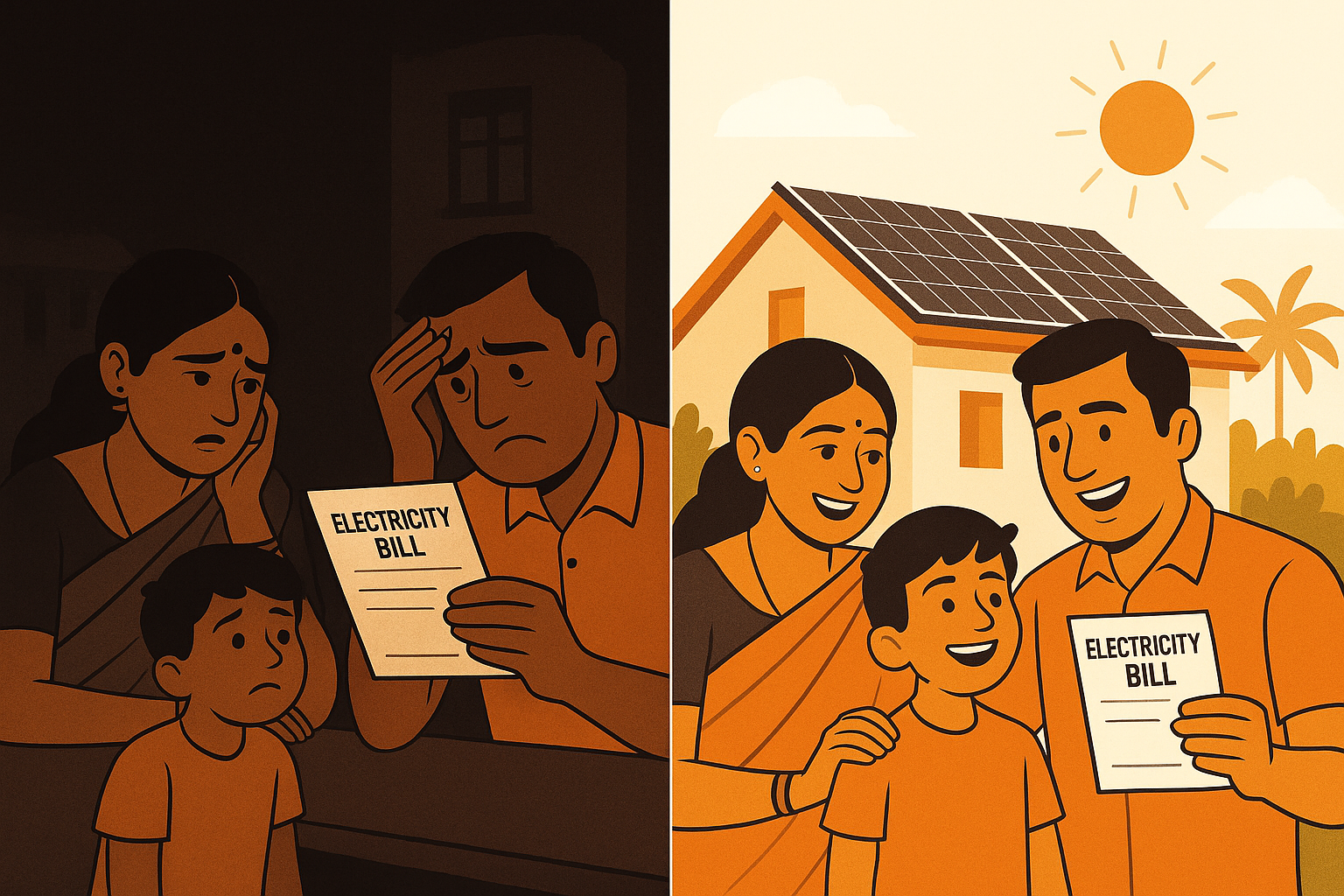
Every month you delay is another month of paying full electricity bills. With subsidies of up to Rs 78,000, additional Maharashtra state support, and electricity savings of Rs 30,000-43,000 per year, rooftop solar is the smartest investment a Maharashtra homeowner can make in 2026.
Here is how to get started with AceSolarTech:
- Check your savings — Use our Solar Savings Calculator to see your personalized estimate
- Browse current offers — Visit our Deals page for the latest installation packages
- Contact us on WhatsApp — Send us your electricity bill and we will prepare a free proposal within 24 hours
The PM Surya Ghar scheme has a fixed budget and a deadline of FY 2026-27. Once the allocation for Maharashtra is exhausted, the subsidy window closes. Do not miss this opportunity to power your home with clean, free solar energy.
AceSolarTech — Your trusted solar partner in Maharashtra. From paperwork to panels, we handle everything.
This guide was last updated on February 19, 2026. Subsidy amounts, eligibility criteria, and processes are based on the latest guidelines from MNRE and MSEDCL. For the most current information, visit the official PM Surya Ghar portal or contact AceSolarTech directly.
Sources: MNRE - PM Surya Ghar Portal, Maharashtra Energy Department, MSEDCL Net Metering, PIB Government of India, IBEF - PM Surya Ghar